Successful cases of Jubailu industrial drone construction
The industrial drones of Jubailu Power Technology (Linyi) Co., Ltd., with their excellent performance and advanced technology, have shown unparalleled advantages in various complex construction scenarios. A series of successful cases have demonstrated their key role in promoting changes in the industrial construction field.
1. Mountainous area power infrastructure material lifting project
In the high mountains of western Sichuan, a new high-voltage transmission line construction project is in full swing. The terrain in this area is difficult, with numerous peaks and deep valleys, making it difficult for traditional transportation methods to face such terrain. It is difficult for large transport vehicles to pass through the winding, narrow and rugged mountain roads, and manual transportation of materials is not only inefficient but also costly, seriously hampering the construction progress.
The intervention of Jubailu Industrial Drone completely reversed this situation. Its large-load model drone has a maximum payload of [X] kilograms and can easily lift various power infrastructure materials, such as transmission tower components, cable drums, etc. The drone is equipped with a high-precision satellite navigation system and intelligent obstacle avoidance system, which can accurately shuttle between valleys according to preset routes and flexibly avoid abrupt peaks and dense woods. In actual operations, the drone took off from the material gathering point at the foot of the mountain, quickly climbed to a high altitude, and flew smoothly to the construction point on the top of the mountain. In the past, transporting a set of transmission tower components often took a whole day and was greatly affected by weather and road conditions, relying on mules and horses and manual shoulder carrying. ; Nowadays, Jubailu industrial drone can complete one-way lifting in just tens of minutes, improving transportation efficiency by nearly 10 times. According to statistics, after using the drone, the material transportation cost of the entire power infrastructure project has been reduced by about 50%, and the construction period has been significantly shortened, effectively ensuring that the power project is completed on time and providing a solid guarantee for the power supply upgrade in remote mountainous areas.
2. High-altitude rust removal and coating project for extra large bridges
Above the Yangtze River, a large bridge is under construction spanning both sides. The main tower of the bridge towers into the sky and there are many piers and columns. The safety and efficiency of high-altitude operations have become severe challenges faced by the construction team. Traditional high-altitude rust removal and painting operations require the construction of complex scaffolding or the use of high-altitude hanging baskets. Not only is the construction process time-consuming and laborious, but also in high-altitude strong wind environments, the safety risks of construction workers are extremely high, and the construction progress is also very slow.
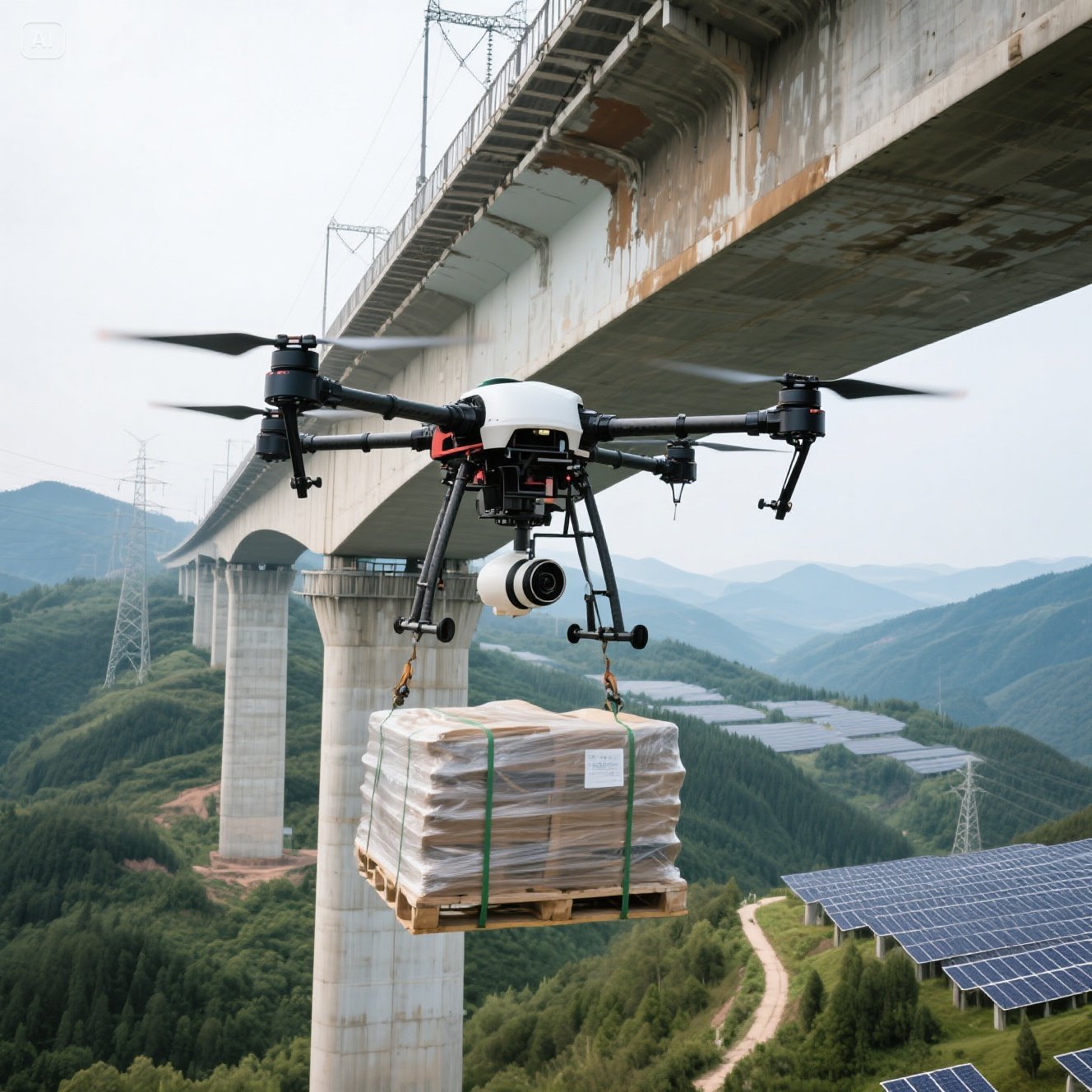
The Jubailu industrial drone is equipped with professional rust removal and painting equipment, which has become a "magic weapon" to solve this problem. Through its flexible control system, the drone can accurately hover at the locations where work is required such as bridge piers and main towers. It is equipped with a high-pressure water gun and rotating brush head, which can effectively remove rust and stains on the surface of the bridge body. ; Subsequently, the equipped automatic painting device can evenly spray protective paint on the surface of the bridge body to ensure the coating quality. During the construction of a certain bridge section, manual rust removal and painting could only complete a working area of about 50 square meters per day in the past, and due to the weather, the number of effective construction days per month was less than 20. ; The Jubailu industrial drone can operate on an area of more than 500 square meters per day, and can work normally even in breezy weather, significantly increasing the number of effective construction days. The rust removal and painting project of the entire bridge was shortened by nearly one-third with the help of drone construction. At the same time, the risk of construction personnel working at high altitudes was avoided, ensuring the safety of construction personnel. The construction quality was also significantly improved, laying the foundation for the durability and safety of the bridge.
3. Material transportation project for photovoltaic power station construction in mountainous areas
In the mountainous areas of Yunnan, a large-scale photovoltaic power station is planned to be built. The project site area has complex terrain, steep hillsides, and the slope in some areas is close to 45 degrees. The vegetation is dense and it is difficult for conventional vehicles and mechanical equipment to enter. The transportation of a large number of photovoltaic panels, brackets and other materials required for the construction of photovoltaic power stations has become a "stumbling block" to the advancement of the project.
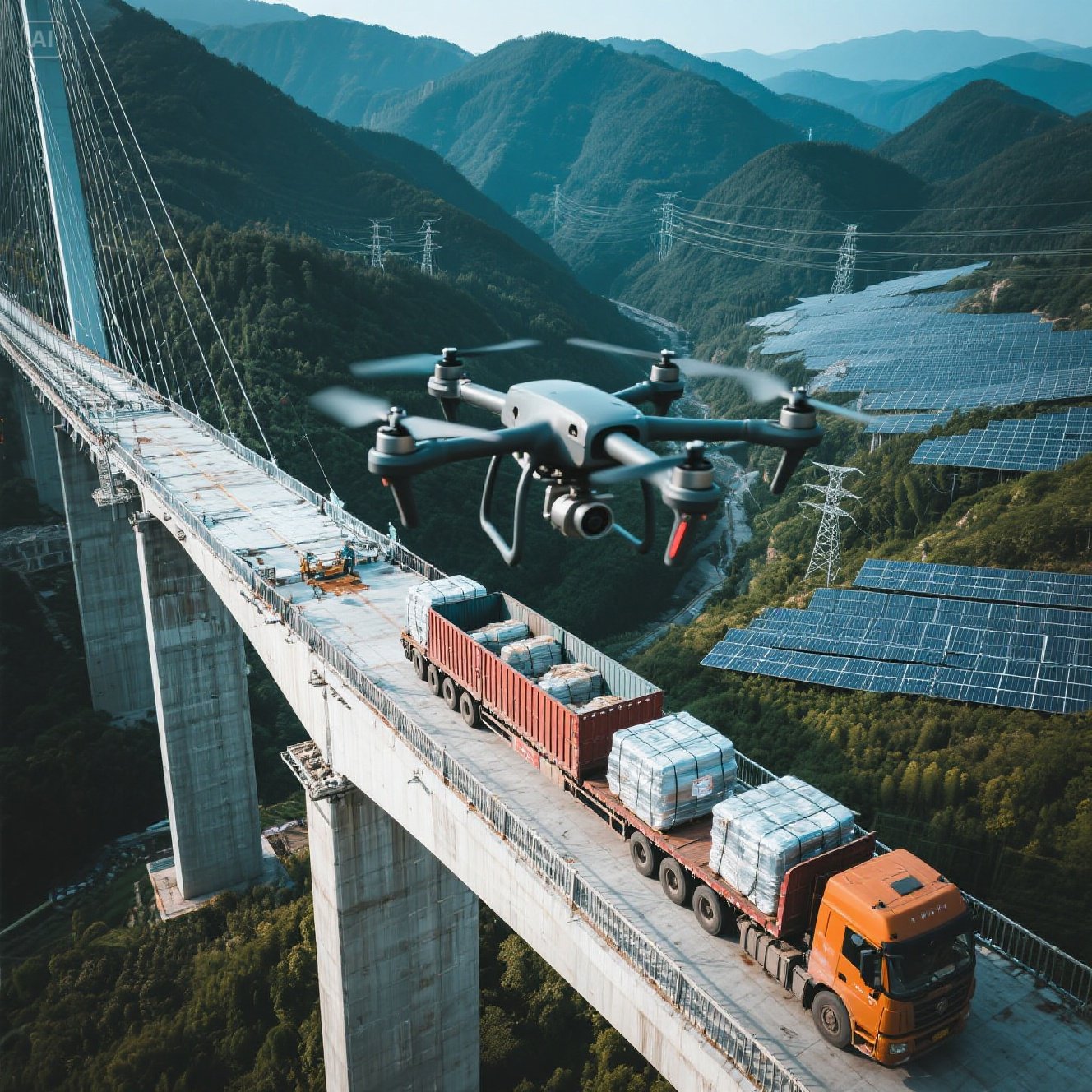
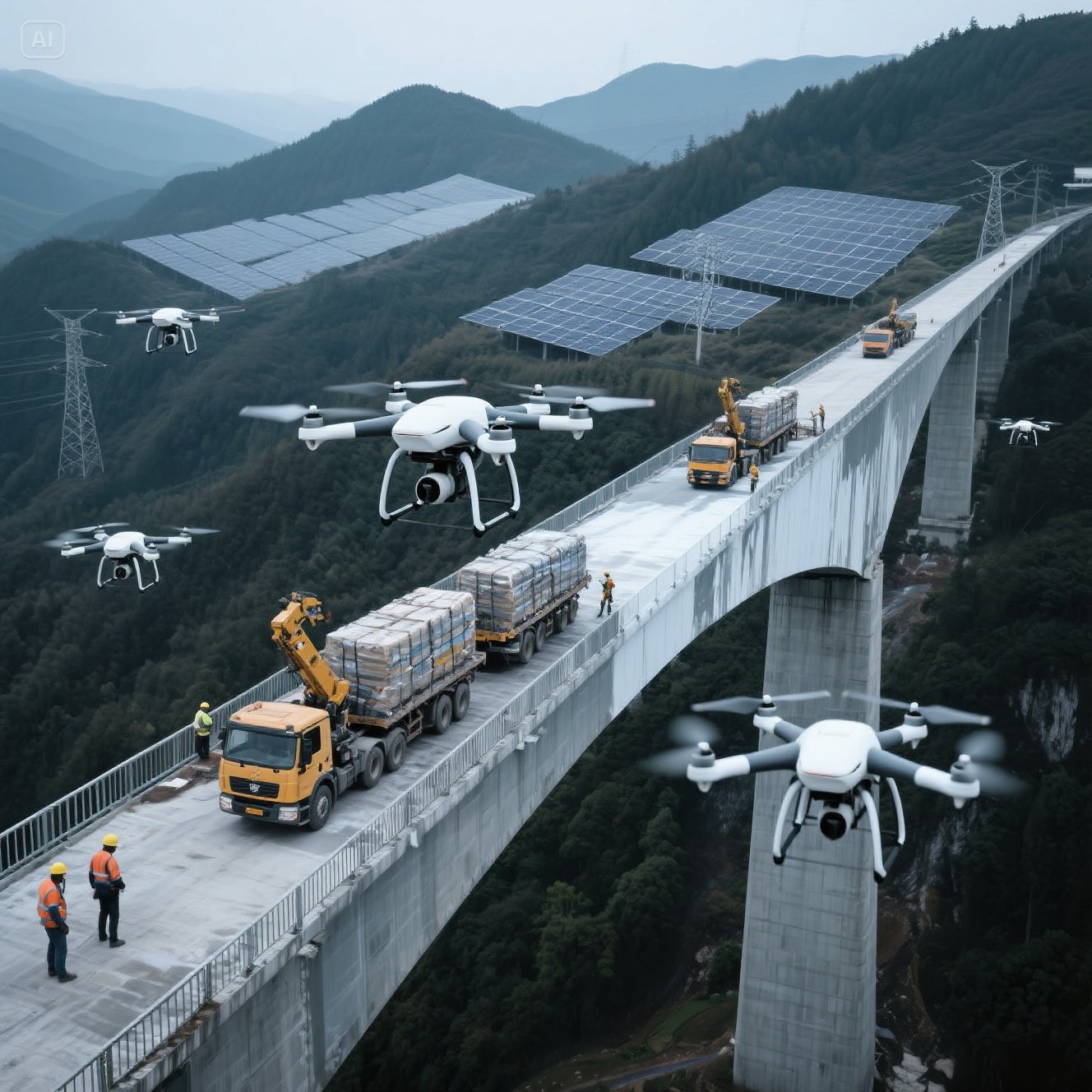
The "air transport team" formed by Jubailu Industrial UAV quickly went into operation. UAVs with different load specifications work together. Small-load UAVs are responsible for lifting light but large-area materials such as photovoltaic panels, while large-load UAVs are responsible for transporting heavier materials such as brackets and basic materials. Through the advanced visual recognition system, drones can accurately locate take-off and landing points in complex mountainous environments and accurately deliver materials to designated construction locations. In this project, after using drones to transport materials, the material transportation efficiency increased by more than 8 times compared with traditional manual handling. The material transportation work that was originally expected to take several months to complete was completed in just over a month with the help of drones, which greatly accelerated the construction progress of the photovoltaic power station, enabling the project to be connected to the grid in advance to generate electricity, injecting strong impetus into the development of local clean energy.