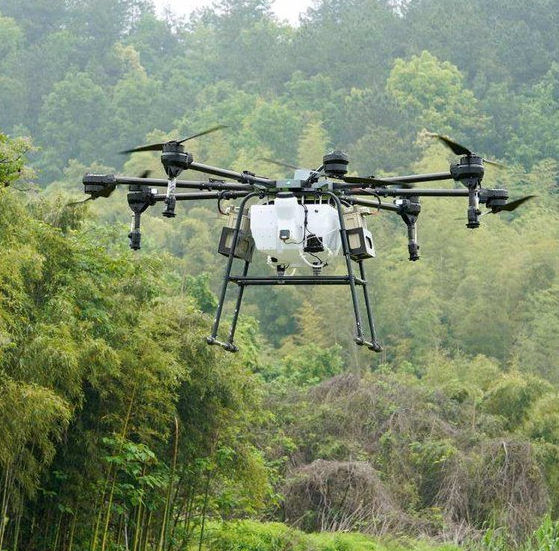
1. Core Upgrade: Principles of Vertical Height Difference Adaptation Technology (Newbies can understand it in seconds)
Integrating "dual GPS altitude positioning + multi-level power distribution + hydraulic adaptive suspension" technology, it automatically matches the power output and braking strategy for the common 260-meter vertical height difference and 15-30° steep slope scenarios on the 700-meter mountain road in Enshi Mountain. It completes the height difference adaptation within 300ms to ensure that the car does not slip when going up steep slopes and does not overspeed when going down, and there is no need to manually adjust parameters throughout the process.
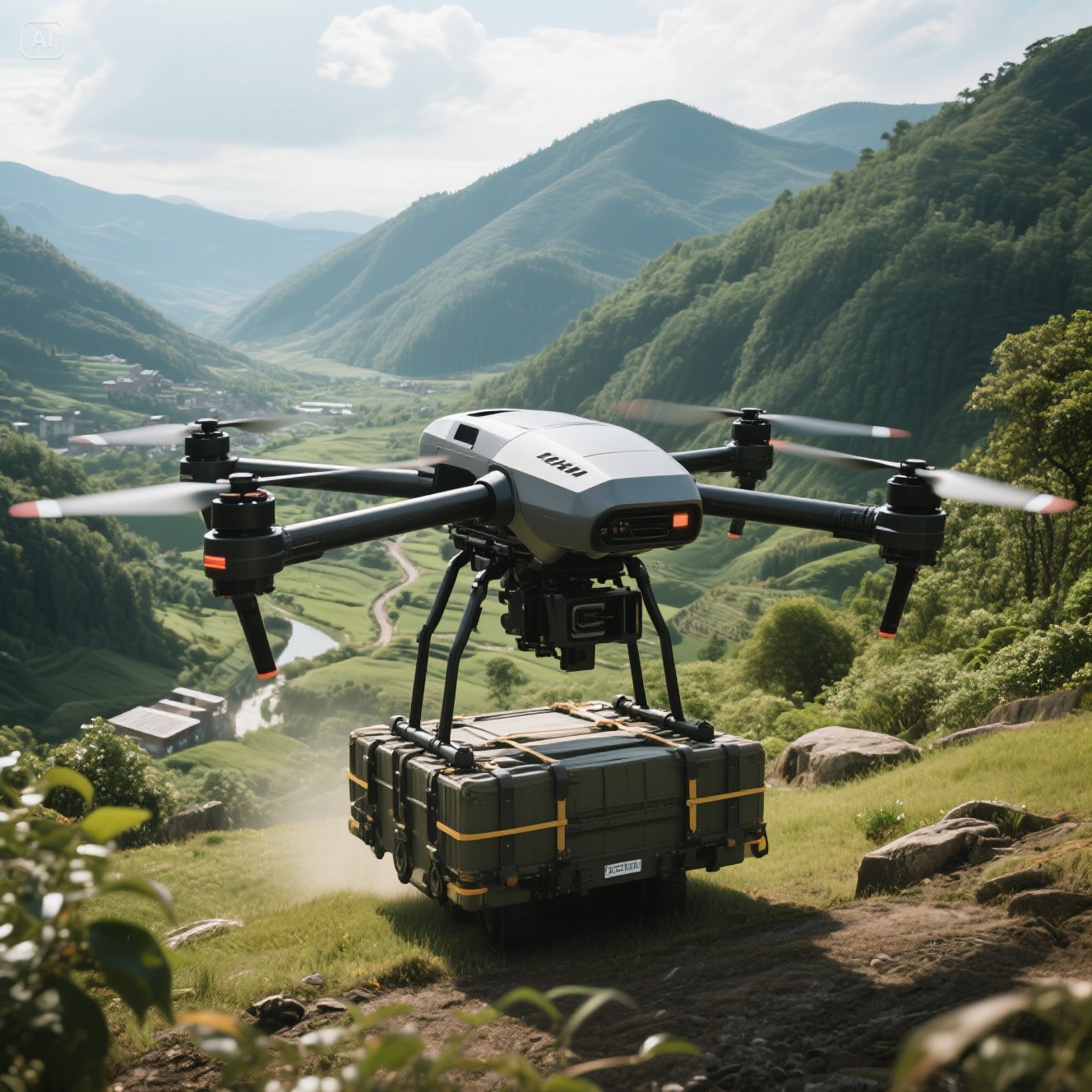
2. Three core technical points (exclusive to Enshi Mountain Area, accurately implemented)
Technical Point 1: Vertical height difference pre-adaptation (coping with multi-level slopes on 700-meter mountain roads)
Operation steps
Height difference data collection :
After starting the transport aircraft, switch to the "Enshi Mountain Area Special Mode" (selected in the "Terrain" option on the central control screen), and the system automatically downloads the preset 700-meter mountain road elevation map (supports offline use and covers the main mountain transportation routes in Enshi);
If it is an unfamiliar route, click the "elevation scan" button, and the drone will complete the 700-meter path height difference mapping within 30 seconds after taking off, and generate a "slope segment map" (red segment = steep slope ≥20°, yellow segment = medium slope 10-20°, green segment = gentle slope <10°).
Load and height difference matching :
After inputting the load value of 200KG, the system automatically allocates power according to the gradient section map: the steep slope section strengthens the driving torque (30% higher than on flat ground), and the gentle slope section balances power and energy saving.;
The cargo fixation adopts the "front-heavy and rear-light" optimization solution (front-to-rear weight ratio 6:4). Anti-slip cushioning is added to the binding belt to prevent the cargo from moving forward when driving on steep slopes. Refer to GB/T 20014.3 Mountain Transportation Safety Standard.
Adaptation status confirmation :
The central control screen displays "Height difference adaptation completed" (green mark) + the preset speed of each road section (steep slope ≤ 0.6km/h, medium slope ≤ 1.0km/h, gentle slope ≤ 1.5km/h);
If a local slope >30° is detected, the system will pop up a “detour prompt” and automatically plan the shortest detour path (detour distance ≤50 meters) to avoid over-limit operations.
Key Tips
Before winter operations, turn on the "height difference preheating" function, and the system will heat the hydraulic system in advance to avoid adaptation delays caused by low temperatures.;
Before going on a long steep slope (≥100 meters), press the "Power Reserve" shortcut key, and the system will store power in advance to prevent lack of power midway.
Technical Point 2: Efficient crossing operation of 700-meter mountain road (dynamic adaptation of vertical height difference)
Operation steps
Mode selection :
Click the "Height Difference Crossing" icon on the central control screen and select "Efficiency Mode" (priority to ensure transportation efficiency) or "Safety Mode" (recommended in rainy and snowy weather, speed reduced by 20%);
When the "continuous adaptation" function is turned on, the system monitors elevation changes in real time and adjusts power and braking parameters every 5 meters without manual intervention.
Steep slope driving operation :
Uphill (slope 15-30°): The system automatically activates the "auxiliary traction" mode, drawing on the technical principles of the power tow platform and using multi-axis power collaborative output to avoid single-axis overload and increase the climbing efficiency by 40%.;
Downhill (slope 15-30°): Automatically turn on "graded descent", electronic braking intervenes in stages (the braking force is adjusted every 20 meters), the speed is strictly controlled within the preset range, and the braking distance is 15% shorter than on flat ground.;
Sharp bends (turning radius ≤ 1.5 meters): The system automatically reduces the speed to 0.3km/h, and the hydraulic suspension finely adjusts the body tilt (tilt angle ≤ 2°) to avoid sideways movement of the cargo.
Accurate delivery and finishing :
When 10 meters close to the delivery point, press "Height Difference Fine Adjustment", and the system will calibrate the height of the landing point through dual GPS positioning to ensure that the goods dock with the ground at zero height difference when they are lowered.;
If the delivery point is a slope, the "horizontal compensation" function is activated and the hydraulic legs are automatically adjusted to ensure that the horizontal error of the cargo landing point is ≤1cm, adapting to the irregular landing scene in the Enshi Mountain area.
Key Tips
Observe the "elevation curve" on the central control screen while driving. Slow down in advance on red warning sections (steep slopes) to avoid sudden braking.;
When encountering a muddy road section, turn on the "anti-skid mode", and the tires will automatically increase the grip and correct the body posture to prevent sideslip.
Technical Point 3: Enhanced safety protection in Enshi Mountain Area (coping with height difference + severe weather)
Operation steps
Special inspection before start-up :
Braking system: After completing the regular test, an additional "height difference braking test" is performed to simulate the 260-meter vertical height difference braking process. The central control screen displays "steep slope braking effective" before operation can be performed.;
Anti-skid inspection: anti-skid chains must be installed in winter, the tire pressure is adjusted to 2.8-3.0bar (0.3bar higher than flat ground), and the "ice and snow road adaptation" function is turned on;
Equipment inspection: Clean the lidar and camera lenses (avoid obstruction by branches and dust), and confirm the GPS signal strength (≥4 satellites are required for positioning in mountainous areas).
Safety measures during operation :
Rain and snow weather: The system automatically switches to "rain and snow mode", the speed is reduced by 20%, the braking interval is shortened to 10 meters/time, and the "defogging function" is turned on to keep the camera clear;
Exception handling: Yellow warning (such as slight sideslip) system automatically corrects; If there is a red alarm (such as sensor failure), apply emergency braking immediately, turn off the power, and then investigate. Refer to the Xuanen County Mountainous Area Logistics Safety Process.
Safe closing after work :
After arriving at the destination, first pull up the mechanical handbrake, then turn off the "height difference crossing" mode and switch to manual mode;
Check the "height difference transportation report" on the central control screen (including the slope of each road section, driving speed, and number of braking times), confirm that there are no abnormalities, and then turn off the power;
After winter operations, clean the ice and snow on the equipment promptly and check whether the braking system is frozen to avoid affecting the next use.
Key taboos
It is strictly prohibited to carry out height difference crossing operations when the visibility is <8 meters (heavy fog, heavy rain) or the wind force is ≥5 levels.;
It is prohibited to switch modes or turn off the adaptation system when driving on a steep slope, otherwise it may cause braking failure.;
Transportation must not be started before height difference adaptation is completed to avoid safety accidents caused by mismatch between power and slope.