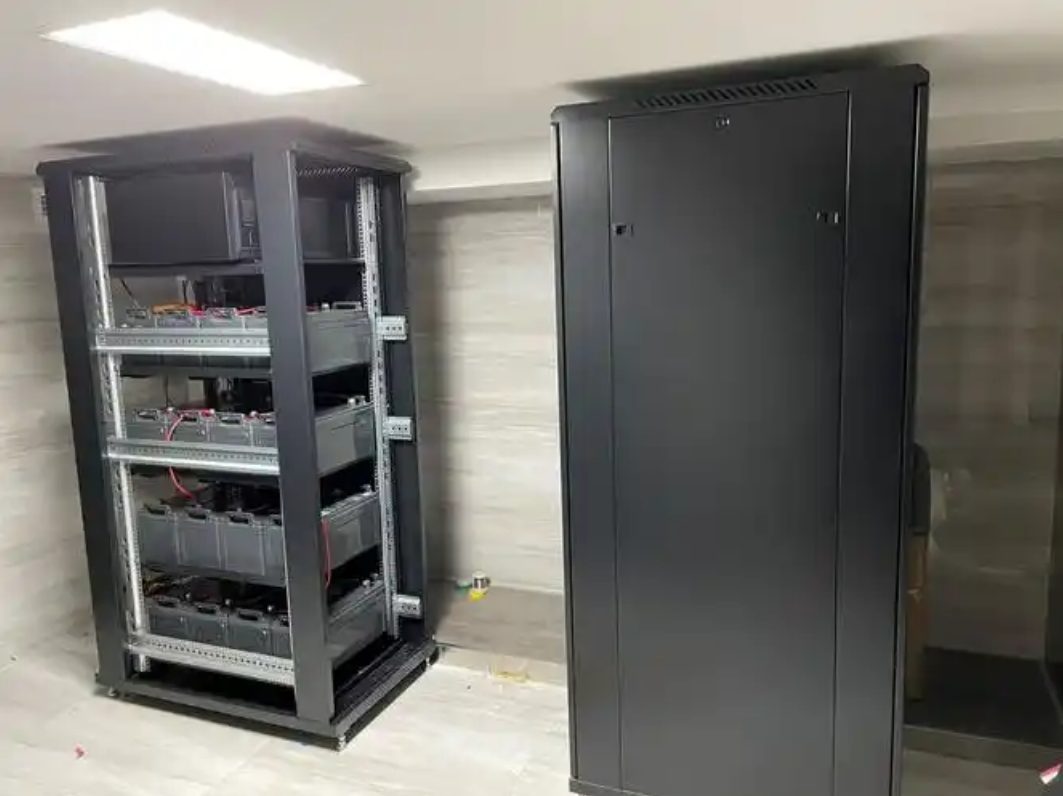
The importance of equipping PLC cabinet with UPS power supply, Kehua uninterruptible power supply purchase and UPS battery replacement guide
In the field of industrial automation, PLC cabinets (programmable logic control cabinets), as the core equipment of the automation control system, undertake key tasks such as equipment operation logic control, data collection and processing, and are widely used in many industries such as electric power, chemical industry, and manufacturing. However, the power environment in industrial sites is complex and changeable, and voltage fluctuations, power outages, etc. occur from time to time, which poses a serious threat to the stable operation of PLC cabinets. Therefore, it is particularly important to equip the PLC cabinet with an uninterruptible power supply (UPS). As a well-known brand in the power supply industry, Kehua's uninterruptible power supply products are recognized by the market for their high performance and high reliability. At the same time, correctly replacing the UPS battery is a key link to ensure the continued and stable operation of the UPS. The following will introduce in detail the importance of equipping the PLC cabinet with UPS power supply, the purchase of Kehua uninterruptible power supply and the replacement of UPS battery.
1. The importance of equipping PLC cabinet with UPS power supply
(1) Ensure production safety and continuity
In industrial production, PLC cabinets control key operations such as the start and stop of production lines and the adjustment of operating parameters of equipment. Once the mains power is suddenly interrupted, the PLC cabinet will stop working without UPS power supply support, which may cause an emergency shutdown of the production equipment. In the chemical industry, the temperature, pressure and other parameters of the reactor need to be monitored and adjusted in real time by the PLC cabinet. A sudden power outage may prevent the reaction from proceeding normally, causing serious safety accidents such as material leakage and explosion. ; In the manufacturing industry, downtime of automated production lines will not only cause production interruption, but may also cause the products being processed to be scrapped and increase production costs. The UPS power supply can switch to the battery power supply mode at the moment when the mains power is interrupted, providing continuous power for the PLC cabinet, ensuring that the production equipment is shut down safely according to the predetermined procedure, avoiding safety hazards and production losses caused by sudden power outages, and ensuring the continuity of production.
(2) Prevent program loss and data errors
The PLC cabinet stores control programs and real-time collected data. These programs and data are the core of the normal operation of the entire automated control system. Abnormal fluctuations in the mains power supply, such as voltage swells, surges, etc., may interfere with the electronic components inside the PLC cabinet, resulting in program loss, data errors, or storage unit damage. For example, when a voltage surge occurs, the memory chip of the PLC cabinet may be impacted, confusing the stored control program and causing the equipment to operate abnormally. The UPS power supply has voltage stabilization and filtering functions, which can effectively isolate interference in the mains power, provide stable and pure power for the PLC cabinet, protect the integrity of the program and data, avoid program failures and data errors caused by power problems, and reduce the time and cost of system troubleshooting and repair.
(3) Reduce equipment maintenance costs
Frequent power fluctuations and sudden power outages will cause irreversible damage to the electronic components in the PLC cabinet, such as chips, relays, power modules and other components on the motherboard. If they are exposed to an unstable power environment for a long time, their service life will be greatly shortened. Once these key components are damaged, not only will expensive components need to be replaced, but it will also lead to production shutdowns and indirect economic losses. Equipped with a UPS power supply, it can effectively reduce the impact of power fluctuations on the PLC cabinet, reduce the equipment failure rate, and extend the service life of the equipment, thereby reducing the frequency of equipment maintenance and component replacement, and reducing the company's equipment maintenance costs.
2. Purchase Kehua uninterruptible power supply
(1) Determine the model based on the load of the PLC cabinet
Calculate PLC cabinet load power : Accurately calculating the power of the PLC cabinet and its ancillary equipment (such as sensors, actuators, etc.) is the basis for purchasing Kehua uninterruptible power supply. The total load power can be obtained by adding the power of all devices by looking at the rated power marked on the device nameplate. For example, if a PLC cabinet contains a CPU module with a power of 100W, an input and output module with a total power of 300W, and connected sensors and actuators with a total power of 200W, then the total load power of the PLC cabinet is 100 + 300 + 200 = 600W. When calculating, a certain amount of power redundancy needs to be considered. It is generally recommended to reserve 20% - 30% margin to cope with the instantaneous current impact when the equipment is started. That is, the rated power of the actual UPS power supply purchased should not be less than 600 × (1 + 20%) = 720W.
Match Kehua uninterruptible power supply type : Select Kehua uninterruptible power supply based on the calculated load power and actual needs of the industrial site. For small PLC control systems with low load power (such as below 1000W), you can consider Kehua YTR11 series online UPS. This series of products is small in size and has double-conversion pure online technology. It can effectively isolate mains interference and output stable sine waves to meet the power quality requirements of PLC cabinets. If it is a medium-to-large industrial automation system, the PLC cabinet has a large load power and requires extremely high power supply reliability, you should choose an online UPS with three inputs and three outputs such as Kehua YTR33 series and YTM series. Take the Kehua YTR33 series as an example. It adopts fully digital control technology, has strong overload and short-circuit capabilities, and supports parallel redundancy functions. Even in complex industrial power environments, it can provide stable and reliable power guarantee for PLC cabinets, and can flexibly increase UPS capacity according to system expansion needs.
3. UPS battery replacement
(1) Determine the timing of battery replacement
Observe the appearance of the battery : Regularly checking the appearance of the UPS battery is an intuitive way to determine whether the battery needs to be replaced. If the battery casing is found to be swollen or deformed, this is usually caused by abnormal chemical reactions inside the battery, excessive gas production, and excessive pressure. ; If there are traces of leakage on the surface of the battery or severe corrosion on the battery terminals, the battery may be damaged and needs to be replaced in time. These appearance changes mean that the performance of the battery has been seriously affected, and continued use may cause a sharp decline in battery performance or even cause a safety accident.
Check battery performance : Use professional battery testing equipment, such as battery internal resistance tester and capacity tester, to perform performance testing on UPS batteries. When the internal resistance of the battery increases significantly and exceeds the normal range, it means that the internal plates of the battery are aging, the active materials are reduced, the reaction efficiency of chemical substances is reduced, and the battery performance is severely degraded. Generally speaking, when the actual capacity of the battery measured by the capacity tester drops below 80% of the nominal capacity, its power storage capacity can no longer meet the normal power supply needs of the UPS, and the battery should be replaced at this time. For example, when a 12V, 100Ah UPS battery detects that its actual capacity is lower than 80Ah, it needs to be replaced with a new battery to ensure the normal operation of the UPS.
Based on age : Under normal circumstances, lead-acid batteries are a commonly used battery type for UPS, and their normal service life is about 3-5 years.; Lithium batteries have a relatively long service life, generally 5-8 years. Even if the battery looks normal and no obvious problems are found in performance testing, after reaching or approaching its service life, the chemical substances inside the battery will gradually deplete, and there is a risk of sudden performance decline. In order to prevent the UPS from being unable to supply normal power due to battery failure when the mains power is interrupted, affecting the operation of the PLC cabinet and the entire automation system, it is recommended that the battery be replaced in time when it reaches its useful life.
(2) Steps to replace the battery
Preparation : First of all, you must purchase a battery that is compatible with the original UPS power supply. Make sure that the model and specifications of the new battery (including voltage, capacity, size, etc.) are exactly the same as the original battery. At the same time, prepare the tools needed to replace the battery, such as insulated gloves, insulated screwdrivers, multimeters, etc. Before replacing the battery, the UPS power supply must be turned off, and the mains input and load must be disconnected to ensure a safe operating environment. Conduct a visual inspection of the new battery to see if there is any damage, leakage, etc. to ensure that the new battery is of good quality.
Remove old battery : Wear insulating gloves, follow the battery connection sequence, use an insulated screwdriver to carefully disconnect the negative connecting wire of the battery pack, and then disconnect the positive connecting wire. For a battery pack consisting of multiple cells connected in series, remove the connections of each cell in turn. During the disassembly process, use labels or markers to mark and record the battery connection sequence and positive and negative polarity directions so that they can be connected accurately when installing new batteries. After removing the connecting cable, carefully take out the old battery. During transportation, avoid collision and falling of the battery to prevent battery damage or leakage.
Install new batteries : Place the new battery on the battery rack in the order and positive and negative polarity directions marked previously, and use a screwdriver to tighten the fixing screws to ensure that the battery is installed securely. Then, connect the positive connecting wire first, and then the negative connecting wire in the order marked. Tighten the screws firmly when connecting to ensure a firm connection and prevent poor contact from affecting battery performance and the normal operation of the UPS power supply. After the connection is completed, use a multimeter to measure the total voltage of the battery pack to check whether the voltage is normal and consistent with the battery pack voltage required by the UPS power supply.
Restore UPS operation : After confirming that the new battery is installed and connected correctly, reconnect the mains input and load of the UPS power supply, turn on the UPS power supply, observe its operating status, and check whether the panel indicators are normal, such as whether the power indicator light is always on, whether the battery charging indicator light flashes normally, etc. After the UPS power supply has been running for a period of time, use a multimeter to check the battery voltage again to ensure that the battery is charging normally and that the UPS power supply can provide stable power supply to the PLC cabinet. If abnormal voltage or unstable equipment operation is found, turn off the UPS power supply immediately and recheck the battery connection.
(3) Precautions when replacing the battery
safe operation : UPS batteries contain corrosive substances such as sulfuric acid and have a certain voltage. Safety regulations must be strictly followed during battery replacement. Wear protective equipment such as insulating gloves and protective glasses throughout the process. Be careful when operating to prevent short circuits between the positive and negative poles and avoid dangerous accidents such as electric shocks and burns. If you accidentally come into contact with battery leakage, you should immediately flush the exposed area with plenty of water for 15 - 30 minutes and seek medical advice as soon as possible.
Properly dispose of used batteries : Used UPS batteries are hazardous waste and will cause serious pollution to soil and water sources if discarded at will. After replacing the battery, the used batteries should be handed over to a professional recycling agency for processing, or contact the local environmental protection department to learn the correct recycling methods to ensure that the used batteries are properly disposed of and avoid harm to the environment.
Whole group replacement principle : When replacing UPS batteries, be sure to replace the entire set, and do not mix new batteries with old batteries. Because there are differences in parameters such as performance and internal resistance between old and new batteries, mixed use will cause the new batteries to overcharge or discharge, which will not only shorten the service life of the new batteries, but also affect the overall performance and power supply stability of the UPS power supply, and may even cause safety hazards.