Application status of agricultural plant protection drones in Laiwu
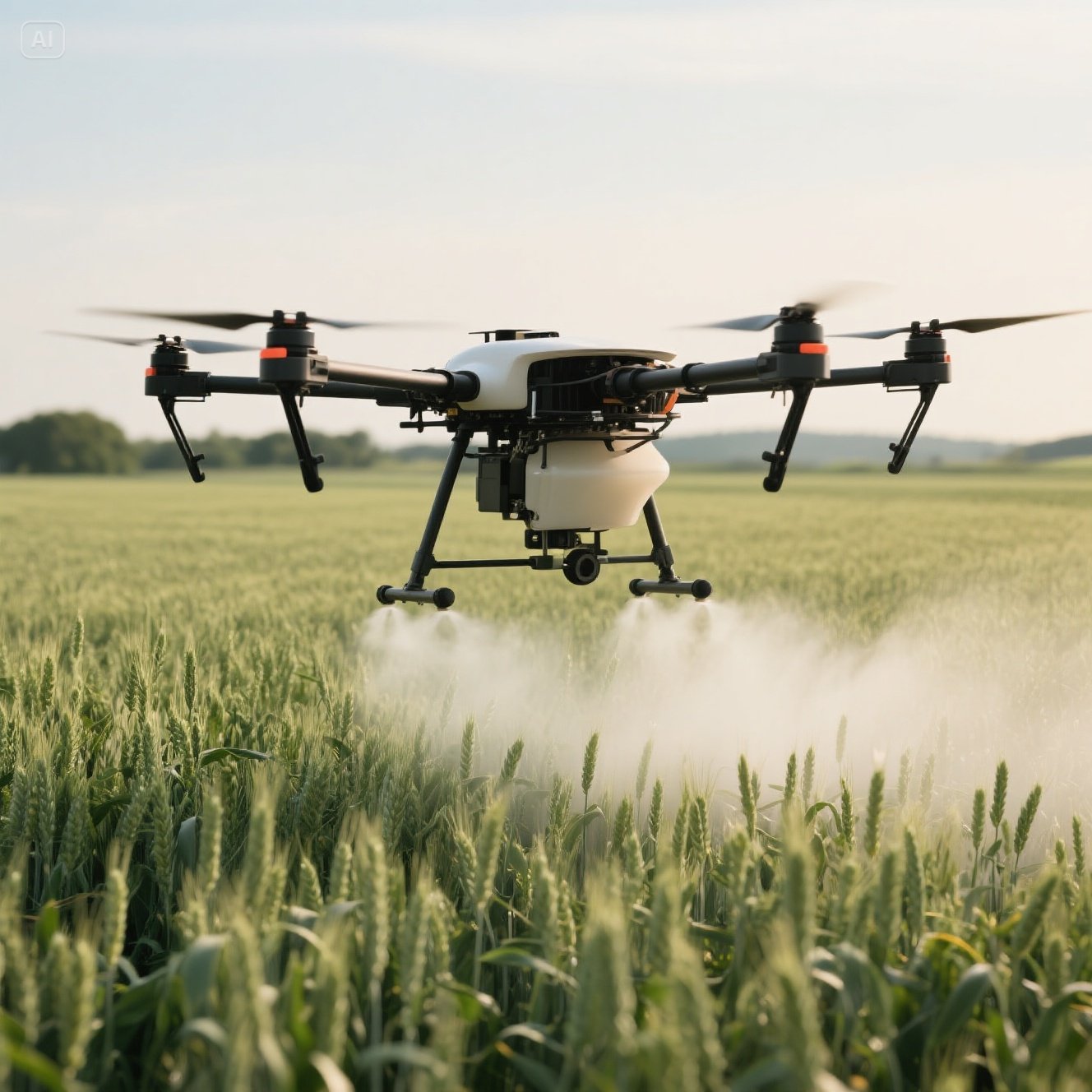
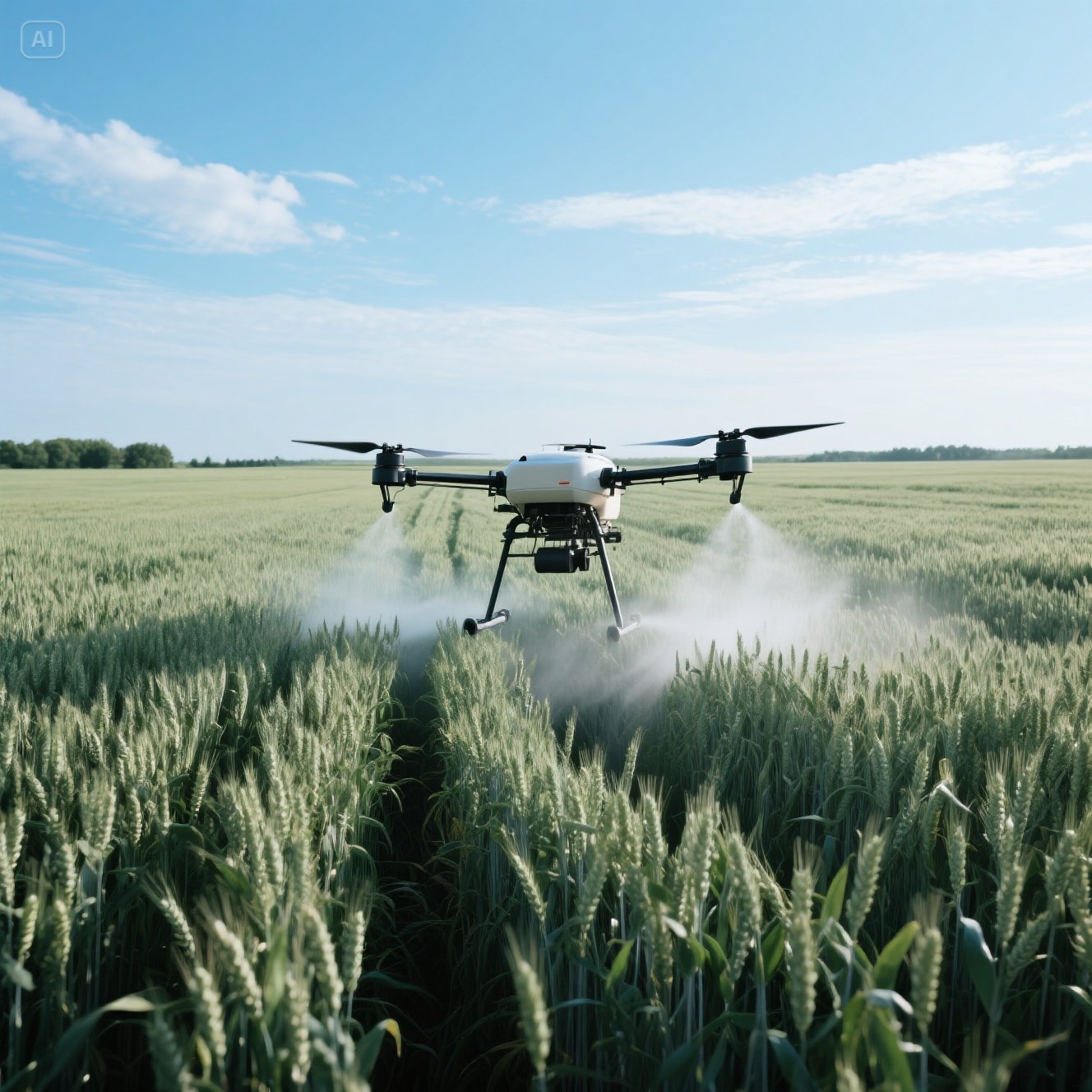
In Laiwu, agricultural plant protection drones have been deeply integrated into many aspects of agricultural production. Taking Guochen Village, Kou Town Subdistrict, as an example, more than 240 acres of wheat fields have been fully equipped with drones for pest control operations. In the past, manual spraying of pesticides on ten acres of fields took two days, which was not only time-consuming and labor-intensive, but also extremely inefficient. Nowadays, the new plant protection drone introduced by the village planting cooperative can complete the pesticide spraying of the whole village's wheat in just over two hours, significantly reducing labor costs. Not only wheat, Laiwu is also actively applying drone technology in ginger cultivation. The Ginger Base in Guawuwu Village, Dawangzhuang Town, Xueye Tourism Area has carried out aerial control operations. The plant protection drone carries 10 kilograms of pesticides. When operating at low altitude, it can complete the spraying of two acres of land in less than one minute, and the efficiency is 50 times that of manual labor.
This method of operation not only has good prevention and control effects and is fast, but also saves costs significantly, reduces farmers' labor intensity, reduces pesticide pollution, improves the quality and safety of agricultural products, and protects the ecological environment. In addition, Laiwu also uses satellite remote sensing technology in the agricultural field to carry out full-cycle monitoring such as intelligent extraction, growth analysis, and yield estimation of crops represented by ginger. The cooperation of drones and satellite technology can provide Laiwu agriculture with more comprehensive and accurate data support from different dimensions, both low and high altitude, to assist agricultural production decisions.
Key points for purchasing large payload drones
Matching load capacity : If it is used for agricultural plant protection, a drone with appropriate load capacity needs to be selected according to actual operational needs. For example, pesticide spraying or fertilizer spreading on large areas of farmland requires large-load drones to reduce the number of round trips and improve operation efficiency. Like the XAG P150 series, the load capacity is ≥15kg, which can meet the needs of carrying heavier agricultural supplies. If you plan to transport agricultural products or agricultural equipment, you must accurately assess the weight of the goods and choose a drone with a corresponding load level. For example, DJI FlyCart 30, DJI's first civilian delivery drone, has a maximum load capacity of 30 kilograms in dual-electric mode and 40 kilograms in single-electric mode. It is suitable for short-distance transportation of agricultural products of a certain scale. However, it should be noted that its load capacity and battery life are inversely proportional, and it needs to be comprehensively considered based on the transportation distance.
Battery life assessment : Battery life directly affects the operating range and efficiency of the drone. The battery life of lithium battery drones is generally 2-4 hours, which may not be able to meet the demand for large farmland in Laiwu or scenarios that require long-distance transportation. At this time, hydrogen fuel cell models can be considered, whose battery life can be about three times that of traditional lithium battery models. For example, if ordinary lithium-battery drones are used in agricultural operations in some mountainous areas of Laiwu, they may frequently need to return for charging. Hydrogen fuel cell drones can complete a wider range of plant protection or transportation tasks after a single charge. However, the maintenance cost of hydrogen fuel cells must be considered relatively high, which is about twice that of lithium batteries.
Wind resistance performance requirements : There are certain wind changes in the climate conditions in Laiwu area, especially when working in open farmland or mountainous areas. Therefore, when purchasing a large-capacity drone, the wind resistance rating is crucial. For general outdoor operations, you need to choose a model with wind resistance ≥ level 6 (wind speed 10.8 - 13.8m/s). For example, the DJI T60 agricultural drone has a wind resistance of level 7 and can operate stably under relatively complex meteorological conditions, ensuring the accuracy and safety of pesticide spraying or cargo transportation, and avoiding operation deviations or drone loss of control due to the influence of wind.
Consideration of intelligence level : Intelligent functions can greatly improve the operational convenience and accuracy of drones. Drones with AI obstacle avoidance functions, such as the DJI Mavic 5's bionic vision system, can automatically identify and avoid obstacles during flight, reducing the risk of collision and ensuring the safety of the drone and operators. For large-scale agricultural scenarios that require the collaborative operation of multiple drones, drones with cluster control functions have obvious advantages. For example, Daotong EVO III supports the collaborative operation of hundreds of drones, which can achieve efficient unified scheduling and management and improve overall operating efficiency.
Suggestions for selecting industrial drones
Selection based on application scenarios
Agricultural plant protection scene : In addition to the large load requirements mentioned above, attention should also be paid to whether the drone supports the variable spraying function. For example, the XAG P150 series is equipped with multi-spectral sensors that can accurately identify crop growth and automatically generate fertilization plans, reducing pesticide usage by 30%, enabling precision agricultural operations, reducing agricultural input costs, and protecting the soil and environment.
Power inspection scene : The drone is required to have long endurance (≥4 hours) and high-precision positioning capabilities. For example, the CW-100Max gasoline-electric hybrid model of Zongheng Co., Ltd. has a long battery life, and can realize centimeter-level three-dimensional modeling with lidar, which can conduct all-round and high-precision inspections of power lines and detect hidden line faults in a timely manner.
Logistics and transportation scenarios : Paying attention to the load capacity (≥300kg) and wind resistance level (≥6 levels) are key. The Puzhou S400 heavy-duty drone has a load capacity of 300kg, supports 500 kilometers of cross-sea transportation, and uses Beidou third-generation millimeter-level positioning to ensure accurate routes. It is suitable for long-distance, large-volume logistics transportation tasks. However, its acquisition and operating costs are relatively high, and it needs to be selected after a comprehensive evaluation of the logistics business volume and budget.
emergency rescue scene : Prioritize models with rapid deployment and modular design. The Aoshi XC-25 Double-headed Dragon UAV can be assembled in 2 minutes, has an ultra-long endurance of 6 hours, and can be equipped with a thermal imager to perform 72-hour uninterrupted search and rescue missions. The modular design allows for rapid replacement of corresponding equipment, such as life detectors, megaphones, etc., according to different rescue needs to improve rescue efficiency.
Consider the characteristics of the drone itself
Power system : Brushless motors have become the mainstream choice for industrial drones due to their high efficiency (80% - 90%), long life (no brush wear), and high power density. The KV value of the motor affects the propeller it is suitable for. Low KV value motors (<1000) are suitable for use with large propellers for heavy loads. High KV value (>2000) motors with small propellers are suitable for high-speed racing, but are not suitable for industrial operations. The current carrying capacity of the ESC needs to match the maximum current of the motor, and its protocol support must also be considered. For example, the DShot protocol can reduce latency. Propeller materials include plastic (light weight and low cost) and carbon fiber (high strength and low vibration). The larger the diameter, the higher the lift, but a larger torque motor is required. ; In terms of propeller pitch, large propeller pitch is suitable for high speed, while small propeller pitch is suitable for hovering efficiency. Multi-rotor drones need to be paired with forward and reverse propellers to offset the anti-torque. In terms of batteries, lithium polymer batteries have high energy density, but care must be taken to prevent overcharge/over-discharge. The voltage is determined by the S number, the capacity directly affects the battery life, and the discharge rate (C number) determines the instantaneous discharge capability.
Protection level and environmental adaptability : UAVs with high protection levels can adapt to harsher working environments. For example, some industrial drones reach IP45 or higher protection levels, which are effectively dustproof and waterproof. At the same time, the temperature adaptability range of drones must be considered. For example, some models can work in environments ranging from -20°C to 60°C. For agricultural and industrial operating environments with low temperatures in winter or high temperatures in summer in Laiwu, it is very important to choose drones that adapt to local climate conditions. In addition, for operations in high-altitude areas, attention needs to be paid to the maximum flight altitude of the drone and whether it has blades optimized for high altitudes and other configurations.
Data transmission and communication : Long-distance, stable data transmission is crucial for industrial drones. For example, some drones use DJI O3 image transmission, which has an image transmission distance of up to 20 kilometers, meeting the needs of long-range transportation or inspection beyond visual range. When the image transmission signal is interfered with, the enhanced image transmission module can be used to achieve 4G enhanced image transmission, ensuring that stable and clear images can be obtained in various complex environments, ensuring the safe operation and mission execution of the drone.
Combined Cost and Regulatory Factors
cost factor : When purchasing an industrial drone, you must not only consider the purchase price, but also comprehensively evaluate operating costs, maintenance costs, and training costs. For example, although hydrogen fuel cell drones have obvious battery life advantages, their maintenance costs are high. ; Some brands with mature technologies and high market shares have relatively low accessories prices and better maintenance networks, which can reduce long-term use costs. At the same time, some drone brands will provide supporting after-sales service packages. For example, DJI provides a variety of guarantee services for its FC30 carrier drone, including third-party liability insurance, cloud platform usage rights, and network RTK services. The value of these value-added services can be considered when purchasing.
regulatory factors : For industrial drones with a take-off weight >7kg, operators must obtain an AOPA driver's license. When operating in the Laiwu area, you need to understand the local airspace management regulations in advance and clarify the scope of the no-fly zone. You can check it in real time through relevant APPs (such as DJI APP). In addition, in agricultural plant protection operations, relevant regulations on the use of pesticides must be followed to ensure that drone spraying operations comply with environmental protection and agricultural product quality and safety requirements.