100KG large load multi-axis UAV strong power design plan
With the trend of industrial-grade UAV application scenarios upgrading to heavy loads, the 100KG large-load multi-axis UAV has become the core equipment for heavy-duty material transportation and engineering operations by virtue of its multi-rotor redundant design and strong power system integration advantages. The following is an elaboration from three aspects: power system architecture, multi-axis layout technology and key design innovations.
1. Core technology of strong power system
(1) Hybrid power integration solution
use Gas-electric hybrid dual power source Architecture: An aviation-grade heavy fuel engine provides continuous basic power, paired with a high-rate lithium iron phosphate battery pack as peak power compensation. This solution breaks through the energy density bottleneck of traditional pure electric systems and achieves 2.5 hours of continuous cruising under a load of 100KG, which is 40% longer than the pure electric solution. The engine is a 2-stroke 4-cylinder turbocharged model with a maximum power of 300kW. It is matched with a high-efficiency permanent magnet synchronous motor (peak efficiency ≥95%) to form a power complementary mechanism: the motor instantly outputs peak power to assist lift-off during the take-off phase, the engine maintains economical speed during the cruise phase, and the battery pack enters energy recovery mode.
(2) High power density power unit
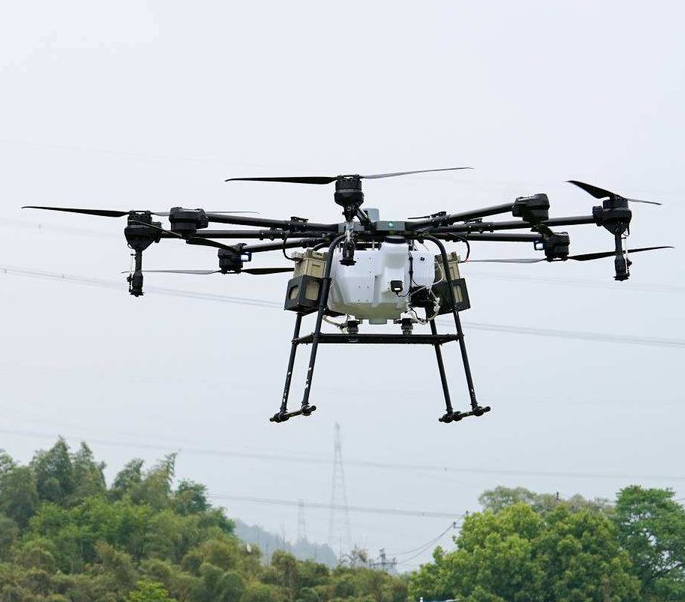
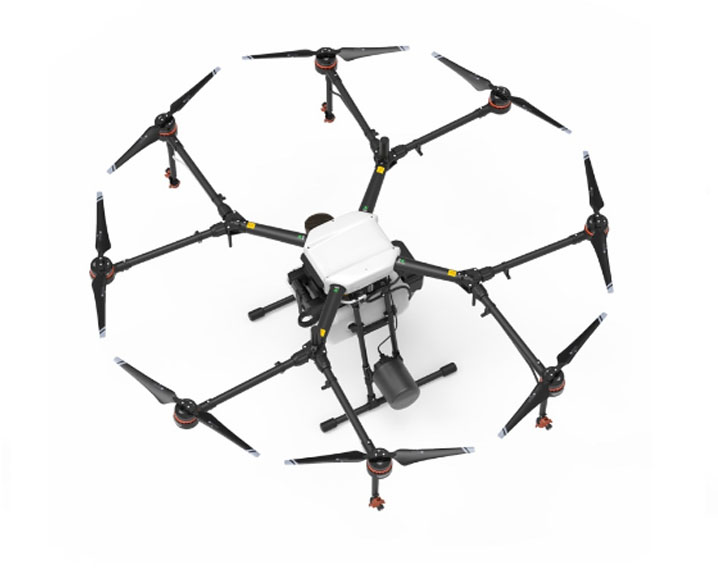
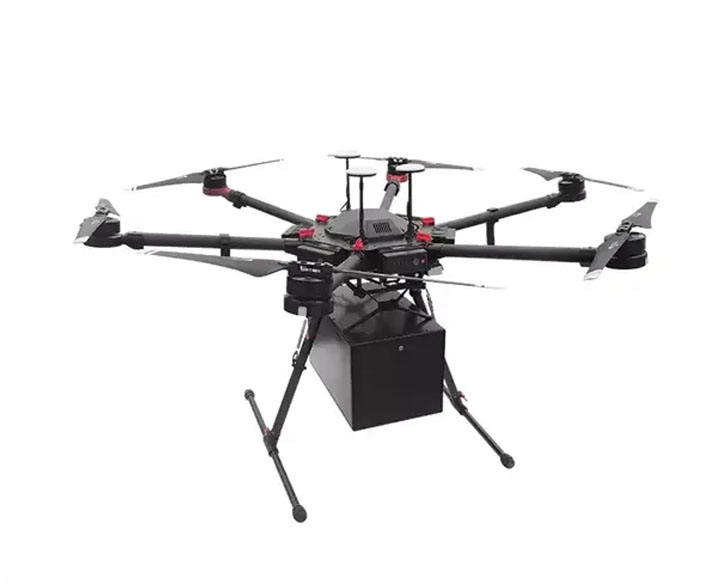
Multi-axis power module It adopts a six-axis twelve-rotor distributed layout and a single-rotor power unit configuration:
Customized brushless motor: using external rotor structure, stator diameter 120mm, rated power 5kW, weight only 1.8kg, power density up to 2.78kW/kg
Carbon fiber composite blades: 1.2 meters in diameter, variable pitch design, 12° pitch angle in cruising state, automatically increased to 18° during takeoff and landing, increasing instantaneous lift by 30%
Intelligent ESC system: Integrated temperature sensor and dynamic PID adjustment, real-time monitoring of motor winding temperature, and automatically starts the power reduction protection mechanism when it exceeds 85°C.
(3) Power management intelligent algorithm
develop Dynamic load balancing algorithm , achieved through multi-sensor fusion:
Real-time calculation of the load center of gravity: Equipped with a 6-axis force sensor array and a sampling frequency of 1000Hz to calculate the offset of the cargo center of gravity in real time
Rotor thrust vector control: Based on the model predictive control (MPC) algorithm, it predicts load changes 0.5 seconds in advance and dynamically adjusts the speed difference of each rotor to ≤10 rpm.
Energy distribution strategy: using fuzzy logic control to automatically switch between "economic mode", "heavy load mode" and "emergency mode" according to battery SOC and engine operating conditions」
2. Technical advantages of multi-axis layout
(1) Six-axis twelve-rotor redundant design
Adopting a regular hexagonal symmetrical layout, stable flight can be maintained even if any two axes fail. Through dynamic simulation verification, under the condition of simultaneous failure of three axes on one side, the drone can still maintain a stable attitude with a roll angle ≤5° and a pitch angle ≤3°, meeting the ISO 2382-16 mechanical safety standard. Each power module is independently powered and equipped with a dual-channel BMS battery management system to realize automatic switching of power paths.
(2) Aerodynamic efficiency optimization
Adopting a "pull-up" rotor layout, the wheelbase of the upper and lower rotors is 1.5 meters. The inter-layer spacing is optimized through flow field simulation to reduce rotor downwash interference and increase aerodynamic efficiency by 15%.
The fuselage adopts a wing-body fusion design with a lifting airfoil in the middle, which can provide 20kg of additional lift at a cruising speed of 15m/s, reducing rotor power consumption.
The landing gear integrates an aerodynamic fairing, which unfolds to form a complete aerodynamic shape during takeoff and landing, reducing the drag coefficient of the entire machine by 12%.
3. Key design innovation points
(1) Thermal management system
Aiming at the heating problem of strong power systems, a three-level heat dissipation system is constructed:
The engine compartment adopts micro-channel liquid cooling technology, the coolant is 50% ethylene glycol aqueous solution, and the heat dissipation power reaches 80kW
The motor adopts a coreless cup winding structure, with forced air cooling, and the winding temperature is controlled within 120°C.
The ESC module integrates a phase change material heat sink with a phase change temperature of 65°C and can absorb an instantaneous heat peak of 200W.
(2) Load-carrying suspension system
develop Active shock absorbing suspension ,Include:
Hydraulic damper: stroke 50mm, damping coefficient can be automatically adjusted according to load, frequency response range 2-20Hz
Six-degree-of-freedom force feedback device: monitors the swing amplitude of the cargo in real time, drives the damper compensation through PID control, and controls the swing amplitude within ±3°
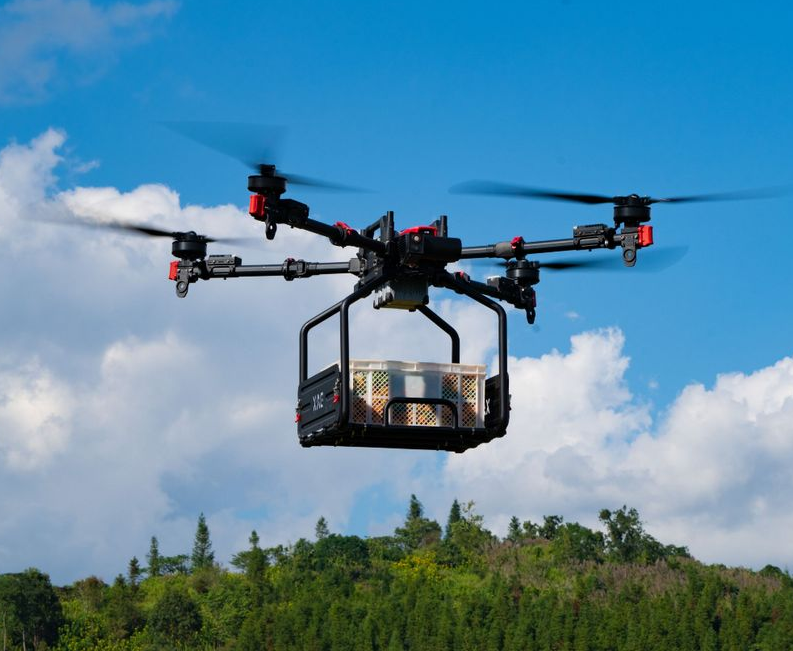
Quick-release load interface: supports ISO standard pallet quick docking, loading and unloading time ≤90 seconds
(3) Application scenario adaptation
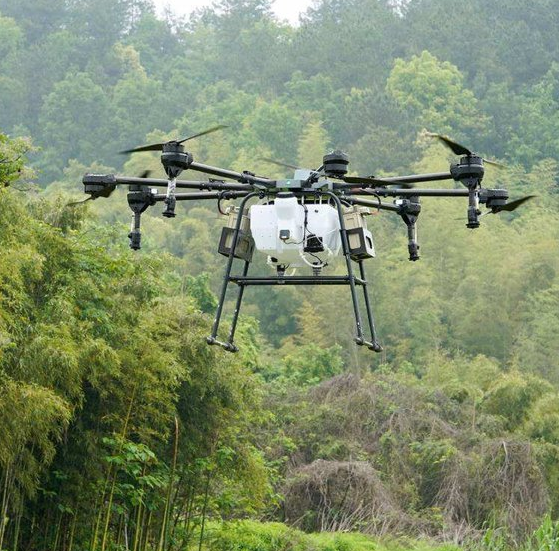
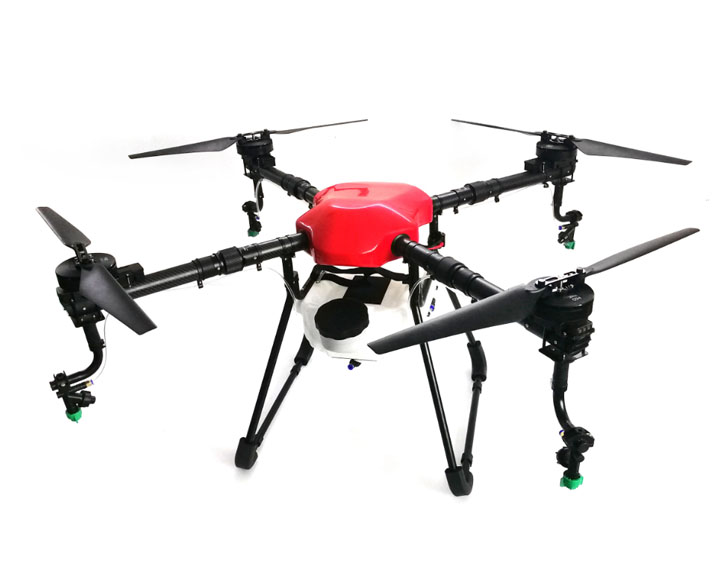
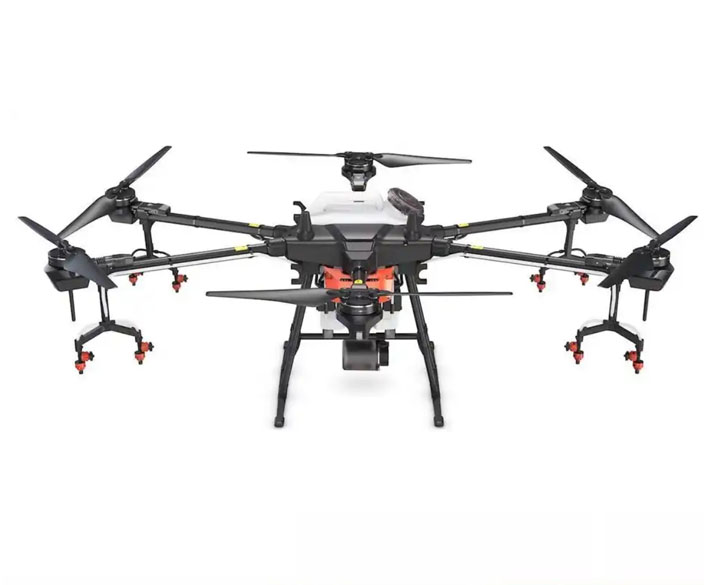
In the mining material transportation scenario, the powerful power system is used to achieve precise delivery of 100kg blasting equipment, with a delivery accuracy of ±0.5 meters.; The agricultural field is equipped with a variable spraying system, with a load of 100kg and can cover 500 acres of farmland. ; In emergency rescue scenarios, with infrared thermal imaging equipment, it can stably hover and perform material airdrop missions in a level 6 wind environment.
Through the synergy of multi-axis power redundancy, hybrid power integration and intelligent control technology, this design solution breaks through the upper limit of the load capacity of traditional multi-axis UAVs. While maintaining the flexible controllability of the multi-rotor, it achieves industrial-level heavy-load operation capabilities and meets the needs of heavy-duty operations in the fields of energy, infrastructure, rescue and other fields.